Tairyuji, Temple 21, Shikoku
a ropeway to the sky


The trip from Temple 20 (Kakurinji) to Temple 21 (Tairyuji) was quite an expedition.
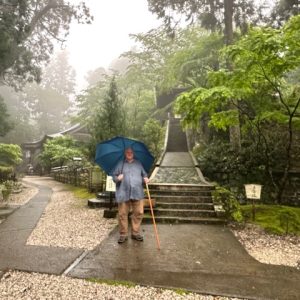
First there was another treacherous mountain climb through rain and mist with narrow roads. But my driver accepted the challenge brilliantly. Our initial destination was a “ropeway” to carry us to the mountain top.
The ropeway – the longest in western Japan, at 2,775 meters long – was almost a mystical experience as it took way up through mountains and forests and dense mist and rain.
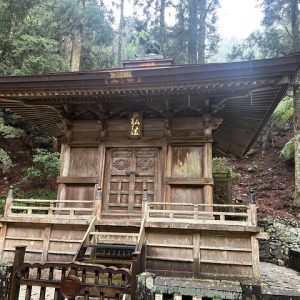
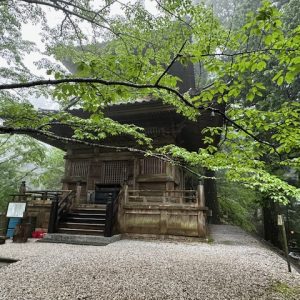
This temple and its pagoda, as in the case of Temple 20 (Kakurinji), were arguably among the most beautiful temples that we visited.
I met a young New Zealander who is cycling the pilgrimage in a two week period. He found temples 20 and 21 extremely challenging. Even in my heyday I could not have done it.
I met a pilgrim who has visited here very many times as reflected in his stamp book (see photo). The poor fellow suffers from heart disease and collapsed last year requiring an ambulance ride and hospitalisation. He has now recovered and completes the Shikoku pilgrimage (all 88 temples) three times a year.
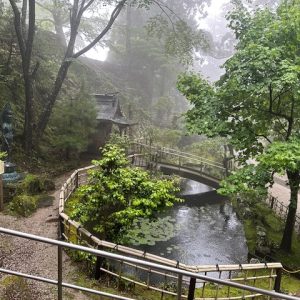
Tairyuji is sometimes known as the Koyasan of the West. It is located near the summit of Mt. Tairyuji, the southeastern tip of the Shikoku mountain range, at an elevation of 618 meters. The grounds evoke the spiritual atmosphere of an ancient temple with old cedar trees that are hundreds of years old towering over visitors.
When Kobo Daishi was 19 years old, he engaged in Buddhist training for 100 days on a rock called Shashingatake, located about 600 meters southwest of the temple. He wrote about this in his book Sankyo Shikki (The Three Teachings), composed when he was 24 years old. The training that Kobo Daishi practiced is called Kokuzo Gumonjiho. It is the most difficult of all Shingon practices. The priest recites the mantra of Kokuzo one million times. It is said to have had a great influence on the formation of Kobo Daishi’s thought during this period of his Buddhist studies.