Shosanji, Temple 12, Shikoku
Second highest temple on the Shikoku Pilgrimage

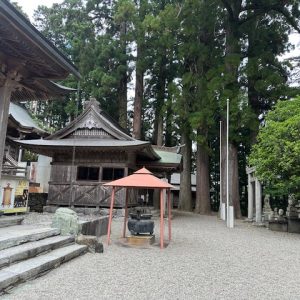


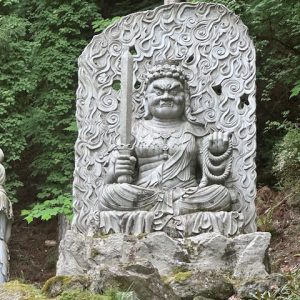
Extraordinary drive through the mountains, along a very narrow road to reach the temple. I was really scared.
From the parking area a long walk up to the magnificent temple. A beautiful feeling up high in the mountainous landscape with a beautiful temple.
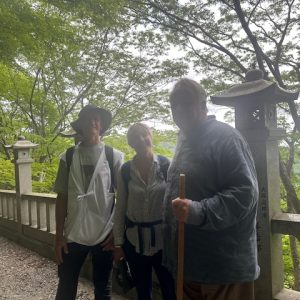
You really have to admire our Japanese friends. I met a couple aged 84 (man) and 82 (woman) who were enthusiastic walkers
I also met a family from Newcastle, Australia, who spent more than 6 hours walking up to the temple.
Located at an elevation of 706 meters on Mt. Shosanji (938 meters elevation), this is the second highest temple on the Shikoku Pilgrimage. There is a magnificent view of the Shikoku mountain range including Mt. Tsurugi and Mt. Shiraga.
There are several temples in the Shikoku Pilgrimage that are reached by trails known as henro korogashi (pilgrims tumbling down, referring to steep sections where it is easy to slip and fall). Shosanji is one of them. It has long been a sacred place for ascetic practices that involved walking up and down steep slopes. Now there is a paved road leading up to the temple.
According to legend, the origin of the temple dates back to the Asuka Period (592-710), when En no Gyoja enshrined Zaogongen (a gongen is a Japanese deity recognized as a form of Buddha) within the mountain. There was a giant snake with supernatural powers living here. Sometimes it breathed fire and caused severe damage to life and property in the nearby villages.
In 815 Kobo Daishi had a dream of Amida Nyorai (Buddha of Limitless Light and Life) when he was resting under a cedar tree. When he woke up, he found a sea of fire before his eyes. He purified himself in the Koritorigawa River and attempted to climb the mountain, but the snake turned the entire mountain into fire and blocked his way. Kobo Daishi walked on, making a mudra (esoteric Buddhist hand gesture) called Maro no In (Mudra of the Water Wheel) and chanting a mantra. The snake appeared from out of a cave close to the summit. Kobo Daishi prayed earnestly and, with the blessings of Kokuzo Bosatsu (Bodhisattva of Wisdom and Memory), he succeeded in sealing the snake in the cave.
He then enshrined a statue of three-faced Daikokuten (Buddhist god of wealth, commerce and trade) that he had carved himself, and prayed for peace and a good harvest for the snake’s victims. The mountain name of the temple (temples are metaphorically called mountains) is Marozan (Maro Mountain) and the institutional name Shosanji (Burning Mountain Temple) come from this legend. In the late Kamakura period (1185-1333), the temple became an imperial temple for Emperor Godaigo (reigned 1319-1338).