Butsumokuji, Temple 42, Shikoku
This is the site of a legend of Kobo Daishi
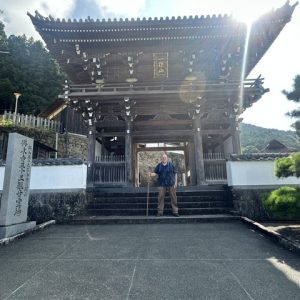
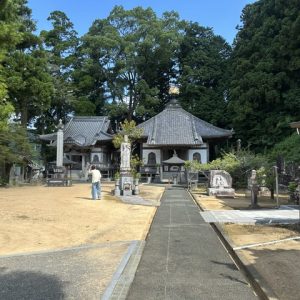
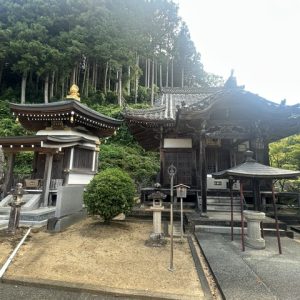
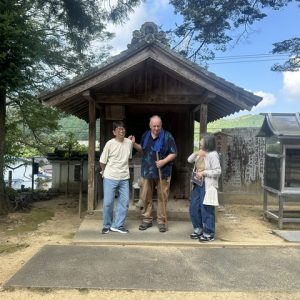
This is a beautiful temple elevated from street level. I met a lovely couple from Kobe, who insisted that Aussie beef is delicious, notwithstanding the excellent beef from their home town. The husband is a retired school teacher.
The husband began the pilgrimage because his mother was doing it. He did not know much about the pilgrimage at first. But as he visited the temples, he felt that his heart was being purified. It enabled him to forget the hustle and bustle of daily life. The couple have been slowly visiting temples, and today will achieve completion.
In chatting with a shopkeeper, we learnt that the number of pilgrims has dropped off. Bus tours have declined. Many seniors who used to do the pilgrimage are now working longer such that they don’t have sufficient time to do the pilgrimage. When they ultimately retire, they may no longer have the energy to undertake the pilgrimage.
Butsumokuji is the site of a legend of Kobo Daishi riding on the back of an ox, which has been passed down through the generations. There is a small building there called Kachikudo. Miniature cow and horse sandals, ceramics of cows and horses, and oblong plaques are displayed here and there within this hall.
Neighborhood farmers used to visit the temple after rice planting was finished, receive fuda (talismans) to protect their cows and horses, and put them on pillars in their barns. In the past, farmers prayed only for the safety of their livestock. In recent years, people have been making offerings to the spirits of animals in general, including their pets. Breeders of fighting bulls also pray here.
Around the year 807, Kobo Daishi met an old man pulling a bull here. At the old man’s suggestion, he rode on the back of the bull. As he did, he saw a single jeweled gem hanging from the top of a large camphor tree, radiating light. When he looked at it carefully, he saw it was a jewel that he had cast toward the east along with a three-pointed vajra (a Buddhist ritual implement) when he was about to return from China, in the hope that he would find a favorable place to build a temple.
He was convinced that this was a sacred place, so decided to build a temple here. He carved a statue of Dainichi Nyorai (Mahāvairocana) from a camphor tree, and inserted the jewel between the eyebrows. He enshrined this statue as the principal image of the temple, named the temple Ikkazan Butsumokuji, and dedicated a copy of the Heart Sutra and the first volume of the Avatamsaka Sutra to the temple.
After that, the temple was venerated and known as Dainichi-sama. It was considered a guardian of cattle and horses. During the Kamakura period (1185-1333), the temple prospered as the family temple of the Saionji family, the lords of Uwajima. During the Sengoku period (1467-1590), the temple suffered from warfare and other hardships, but it was rebuilt and is now full of vitality.