Enkōji, Temple 39, Shikoku
The last temple in Kochi
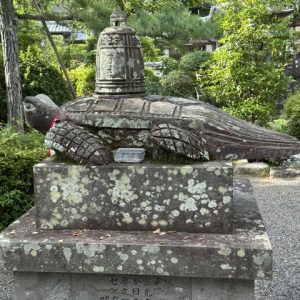
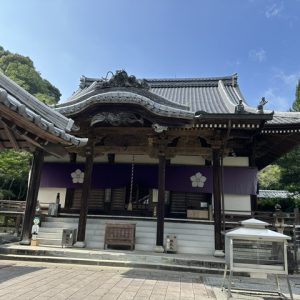
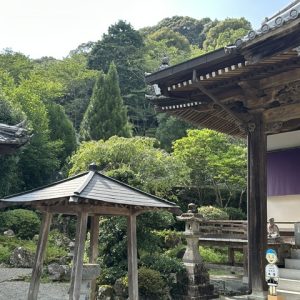
The origin of the name Enkōji is related to the legend of Ryugujo, a supernatural dragon palace under the sea. In 911 a red turtle living in the dragon palace came to land with a copper bell on its back. The monks immediately dedicated the bell to the temple and changed the name of the temple to Shakkizan Enkōji.
It is a small bell , 33.6 cm tall, with an inside diameter of 23 cm. It is inscribed, “On the first day of the eleventh year of the Enki era…” In the early Meiji era (1868-1912), it was rung at the opening and closing of the Kochi Prefectural Assembly. It is a National Important Cultural Property.
In 724, by order of Emperor Shomu (reigned 724-49), Gyoki carved a statue of Yakushi Nyorai (Medicine Buddha) to pray for safe delivery and to ward off bad luck. Then he built this temple and made this statue the principal image. At that time, the temple was called Kikakusan in reference to the appearance of Yakushi Nyorai, Seyakuin and Hokoji. Some of the ashes of the historical Buddha that Gyoki had obtained were put within the statue.
Kobo Daishi visited this temple during the Enryaku era (782-805). The temple was then rebuilt as an imperial temple for Emperor Kanmu (reigned 781-806), and seven major buildings were constructed, along with statues of Nikko and Gekko Bosatsu (the Bodhisattvas of the Sun and Moon). He also poked the ground with his shakujo (Buddhist priest’s staff) and sacred water gushed out. This is now called the Eye Washing Well.