Enmyoji, temple 53, Shikoku
A beautiful in town temple
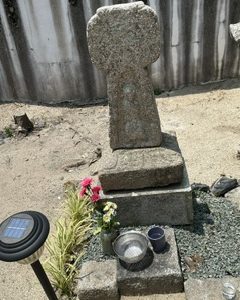
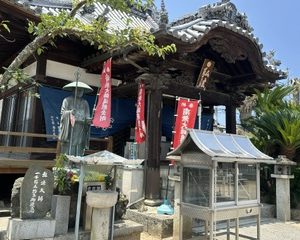

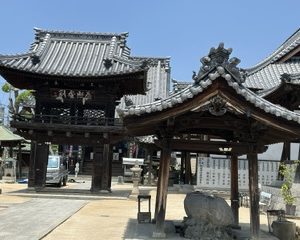
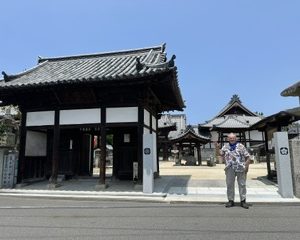
Enmyōji preserves the oldest copper name slip on the Shikoku Pilgrimage. It was discovered by an American pilgrim, Dr. Stahl of the University of Chicago, in March 1924 when he was doing the Shikoku Pilgrimage. He found a copper plate stamped in the case where the temple’s principal image, Amida Nyorai (Buddha of Limitless Light and Life) was enshrined. It is the oldest undamaged copper name slip in existence.
The name of the person who left this copper name slip here was Higuchi Heijin Ietsugu,. He was known for rebuilding Rengeji in Kyoto. He donated stone statues of the Gochi Nyorai. What is particularly noteworthy about this slip is that it is the first documented use of the word henro.
According to legend, in 729, at the order of Emperor Shomu (reigned 724-749), Gyoki carved the principal image of Amida Nyorai and the attendant images of Kannon (Bodhisattva Who Hears the Sounds of the World) and Seishi Bosatsu (Bodhisattva of Strength and Wisdom). He built a large temple with seven main buildings and enshrined the statues. At that time, the temple was located on the coast of Nishiyama, Wakehama, and was called Kaiganzan Enmyōmitsuji.
Kobo Daishi found the temple in ruinous condition. He rebuilt the ruined halls and reestablished the temple as a sacred site. However, the temple lost its prosperity due to repeated fires during the wars of the Kamakura period (1185-1333), and it was moved to its current location by Suga Shigehisa, a powerful local lord, during the Genna era (1615-1624). In 1636 the temple was rebuilt as a direct successor to Ninnaji in Kyoto by order of Kakushin Nyudoshinno of the Omuro school and the temple name was changed to Enmyōji at that time. It is also known for some Christian lanterns with the image of the Virgin Mary carved in relief.