Kakurinji, Temple 20, Shikoku
Perhaps my favourite temple experience


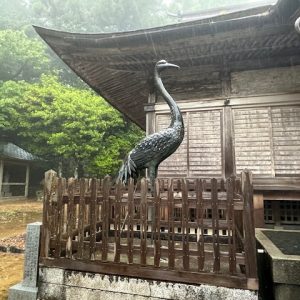


What an adventure! This temple is way up in the mountains, along a narrow road. What’s more it was raining meaning that the road was slippery.
So we hired a taxi to climb the mountain. The driver, a local, showed no fear as he zoomed up the mountain.
From the parking lot, it was a nice little walk to the temple. The rain and mist added a mystical dimension to the experience, as we walked through the rain. We also met up with a bus load of travelling pilgrims.
Kakurinji is located at the top of Mt. Washigao, at 470 meters elevation. From the temple grounds, you can see the mountain peaks of Kishu and Awaji, and the Pacific Ocean in the distance. Giant cedar, cypress, and pine trees, some over 1,000 years old, cover the approach to the temple. The tranquil temple gate evokes a rich atmosphere.
According to legend, Kobo Daishi founded the temple in 798 by order of Emperor Kanmu (reigned 781-806). When he was engaged in Buddhist training, two white cranes spread their wings and landed on an old cedar tree, seeming to protect a small golden Jizo Bosatsu (Earth Treasury Bodhisattva). Delighted by this scene, Kobo Daishi carved a 90-centimeter-tall statue of Jizo Bosatsu from a nearby sacred tree. The Jizo statue was placed inside the larger statue as the principal image of the temple, and the temple was named Kakurinji (Crane Forest Temple).
Because the shape of the mountain near the grounds resembles Vulture Peak, Buddha’s favorite retreat in India, the mountain name of the temple (temples are metaphorically called mountains) became Ryōjuzan (Vulture Peak). Since then the temple has been highly regarded by emperors such as Emperor Heijo, Emperor Saga, and Emperor Junna, as well as warlords such as Minamoto no Yoritomo, Yoshitsune, Miyoshi Nagaharu, and Hachisuka Iemasa.
The temple prospered greatly as a result of the construction of seven major buildings and donations of land. It survived the Tensho period (1567-1568), when temples throughout Awa (Tokushima) were burned by Chosokabe Motochika, perhaps because it was difficult to reach. Local people call the temple Otsuru or Otsuru-san (a friendly way speaking of a crane). It is a temple deep in nature, where wild birds dance in the air.