Kokubunji Temple 80, Shikoku
This temple was founded in the Nara period
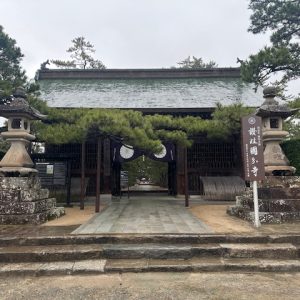
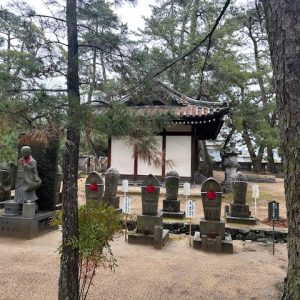
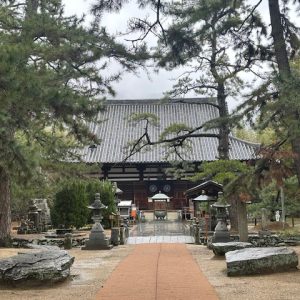

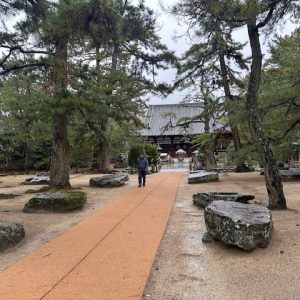
Kokubunji preserves some of the original features from when it was founded in the Nara period (710-794). It is the only Shikoku Pilgrimage temple where the entire area of the original precincts is designated as a Special National Historic Site. The Hondo was rebuilt in the middle of the Kamakura period (1185-1333), with pierced wooden doors on the front and back.
In the center of the temple grounds, 33 foundation stones of the original Hondo are visible, showing that it was as large as the current Kondo of Toshodaiji Temple in Nara. The foundation stones of the seven-storied pagoda are to the right of the temple gate. If the pagoda had survived, it would be larger than the five-storied pagoda of Toji Temple in Kyoto.
The temple was founded during the reign of Emperor Shomu (724-749). It was founded by Gyoki, by imperial order, as the prefectural temple of Sanuki (Kagawa). During the Konin era (810-823), Kobo Daishi repaired the principal image of Senju Kannon (Thousand-armed Bodhisattva Who Hears the Sounds of the World) and designated the temple as a pilgrimage temple, but most of the buildings were destroyed by fire during the Tensho era (1573-1592). There is a record that the temple was a branch of Saidaiji Temple during the Kamakura period (1185-1333). When the present Hondo was built at that time, it received the patronage of the Ikoma and Matsudaira lords of Takamatsu.
The temple is also famous for having the oldest bell in Shikoku. There is a legend that a giant snake had worn the bell. Then Ikoma Kazumasa, a feudal lord in the early Edo period (1603-1868), acquired the bell in exchange for a large area of rice paddies, intending to use it as the bell of Takamatsu Castle. However, it took an unusually large number of men and horses to transport the bell to the castle, and when they arrived at the castle, it did not ring.
Then a serious disease broke out in the castle, causing Lord Ichimasa fall ill. The bell appeared every night at the bedside of the sick lord, crying and saying, “I want to go back to Kokubunji.” In the end, the bell was returned to Kokubunji. Unlike when the bell had been carried to the castle, this time it was easily carried by just a few people.