Sairinji, Temple 48, Shikoku
Nice though unremarkable
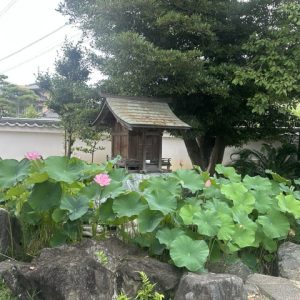


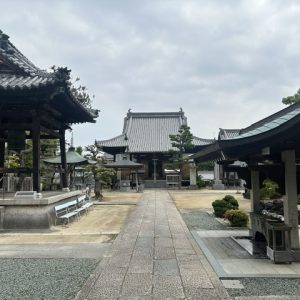
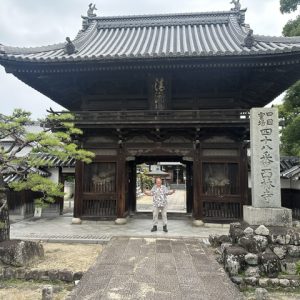
A nice though unremarkable temple in the town of Matsuyama
There is a stream in front of the temple with clean water. In front of the temple gate, there is a stone inscribed with a haiku by Masaoka Shiki, “Autumn breeze, teiregi of Takai, sea bream of Mitsu.” Teiregi is a water plant used as a side dish with sashimi. It grows wild in the clear streams around here and is designated a Natural Treasure by Matsuyama City. Takai and Mitsu are nearby towns.
According to legend, in 741, by order of Emperor Shomu (reigned 724-749), Gyoki and provincial Governor Ochi Tamasumi built this temple as a Provincial Temple to go along with the Provincial Shrine, Ichinomiya. At that time, the temple was located in the Tokui no Sato area around present-day Ono Harimazuka in Matsuyama City. Gyoki carved and enshrined the principal image of Juichimen Kannon Bosatsu (Eleven-faced Bodhisattva Who Hears the Sounds of the World).
In 807 Kobo Daishi stayed at this temple when he made a pilgrimage to the sacred sites of Shikoku. Kobo Daishi consulted with the provincial governor, Prince Ochi Sanekatsu, and moved the temple to its present location. He also designated the temple as a Shikoku Pilgrimage site, and as a place to pray for the safety of the nation.
At that time, the village was suffering from a severe drought. Kobo Daishi poked his staff into the ground nearby and found a vein of fresh water, saving the villagers. Cane’s Pool, located 300 meters southwest of the temple, is said to be the site of this miracle. The water has never run dry. It irrigates the land, and was selected as one of the Top Waters in Japan in 1985.
In the Edo/Kanei era (1624-1644), the temple was destroyed by fire. In 1700 it was partially rebuilt by Matsudaira Ikinomori, his retainers, magistrates, and other officials. Beginning in 1707, the Matsuyama clan supported the temple after a priest of the temple, Kakuei Hoin, fulfilled the villagers’ prayers for rain. The Matsuyama clan made efforts to rebuild the Hondo and Shorodo, and also reconstructed the Daishido and Niomon Gate in the late Edo period (1603-1868). The present Daishido was rebuilt in 2008.