Yasakaji, Temple 47, Shikoku
Another meeting with our Spanish friends
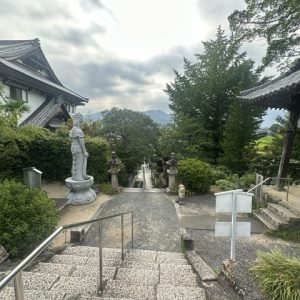
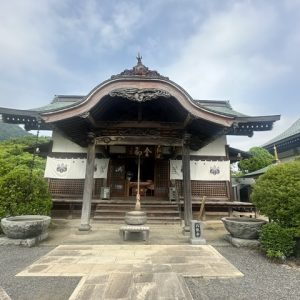
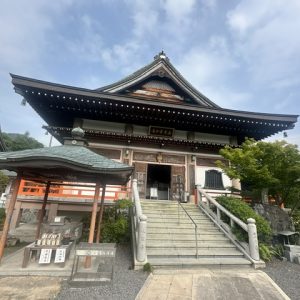
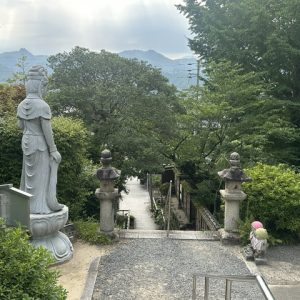
Another temple with a tropical air, though less than 46. We met our Spanish friends again.
Between Jōruriji and Yasakaji, which is about one kilometer to the north, the pilgrimage route winds gently through rice paddies. This part of the pilgrimage is closely associated with the legend of Emon Saburo, who is said to have been the first pilgrim of the Shikoku Pilgrimage.
Yasakaji was founded by Shugendo founder En no Gyoja Shokaku, and thus has a history stretching back 1,300 years. The temple is located halfway up a mountain, and was built in 701 by Ochi Tamaoki, an official of Iyo (Ehime). The temple was built by order of Emperor Monmu (reigned 697-707). It was named after the ya saka (eight slopes), the eight slopes that were cut and built at that time, and also after the word iyasaka, meaning “increasingly prosperous.”
Kobo Daishi conducted Buddhist ceremonies here in 815. He rebuilt the ruined temple and designated it as part of the Shikoku Pilgrimage. The principal image of the seated Amida Nyorai (Buddha of Limitless Light and Life) is said to be the work of the high priest, Eshin Sozu Genshin (942-1017), who laid the logical foundations of Pure Land Buddhism. The temple became a fundamental center of Shugendo (mountain asceticism) dedicated to the Japanese deities Kumano Gongen and the twelve shrine gongen from Kishu. Gongen are native Japanese gods accepted into Buddhism. It was also called Kumano Yasakaji. At that time, the temple had 12 monk’s cells and 48 branch temples within its precincts, and prospered to the extent that it had its own army of monks.
The temple was destroyed by fire during the Tensho period (1615-1626). Due to a succession of rebuilding and fires, the number of buildings was reduced to almost nothing, and the size of the temple continued to decline. The current location of the temple is where the twelve shrine Gongen and the Kumano Gongen were enshrined. The Hondo, Daishido, Gongendo, and a bell tower stand side by side, creating the atmosphere of a quiet village temple.
The basement of the Hondo enshrines about 8,000 statues of Amida Nyorai (Buddha of Limitless Light and Life), dedicated by believers from all over Japan.